T +31(0)639640265
COMPANY
Mentink Project Management was founded on May 1, 2019 by H. Mentink. The company focuses on providing Project Management services to machine factories and other companies in R&D, food, energy and chemicals. Thanks to our many years of international experience in relevant sectors, we are able to adequately provide temporary support for your company. This support can be completed in part or full-time employment.
We are also able to solve your problems with customers or other stakeholders. These problems can be technical, legal or commercial in nature.
EMPLOYEES
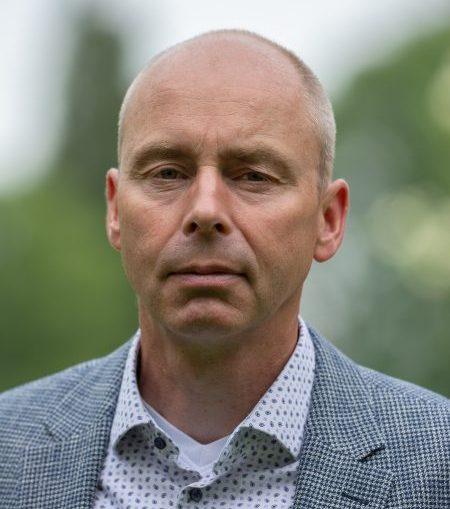
Hans Mentink
Project Manager
Hans Mentink is the founder of the company and has been working as a Project Manager for many years. He is a PMP (PMI) and Prince2 practioner certified and is also in possession of VOL VCA. Hans has a lot of experience with international customers and is sensitive to cultural differences. Thanks to his no-nonsense approach and direct customer contact, he knows how to successfully complete his projects.
PROJECTS
We have contributed to the following projects:
Gazpromneft Moscow refinery: Coru project, Russia
Gazpromneft Omsk refinery: extension project, Russia
Rosneft: different refinery extension projects, Russia
Petrobras: different refinery extension projects, Brazil
Hengli: new refinery project in north east China.
Taqa: Expansion of production installation, DCS and safety systems.
DSM Delft: expansion of yeast production: Delft
Bavaria Breda: expansion of production location
Miscellaneous: production, testing and supply of fire fighting pumps according to NFPA 20, FM and or UL.
CLIENTS TESTIMONIAL
I got to work with Hans during my time at Howden and got to know him as a decisive project manager with an eye for the customer in the first place but at the same time able to manage the result of the project. I certainly think back to the complex projects in oil and gas where many factors have to be taken into account.
Below we will briefly discuss the sense (and nonsense) of Project Management.
This will be done using some definitions and examples, sometimes based on true events
WHAT IS A PROJECT?
There are many definitions of a project, but generally the following basic features apply:
- It is temporary.
- There is a budget.
- There is a scope.
- There is a timetable.
Budget, Scope and Time Planning are always at odds with each other in a project.
Example:
MACHINE
A machine (scope) must be built for a customer. The machine is sold for an amount (the budget) and must be delivered on a specific date (time schedule).
When the machine has been delivered to the customer, the project is completed (temporarily).
SOFTWARE
Instead of a machine it can also be an implementation of a software package (scope), the working software package is then delivered to an internal customer who will work with it.
THE PROJECT TEAM
The Project Manager (PM) is responsible for ensuring that the project team delivers results within the limits of Scope, Budget and Time Planning.
For this it is necessary that the PM is hierarchically above the team, so that he is able to give the correct guidance to the team members. If not, adequate management is not possible and the project is likely to derail.
The PM is also responsible for communicating to stakeholders in the rest of the organization and beyond. For example, the finance department will want to know if the project remains within budget, and the customer will want to know whether the delivery time is at risk.
There are many pitfalls on the way to the delivery of a project, the most important of which are based below on the experience of the writer:
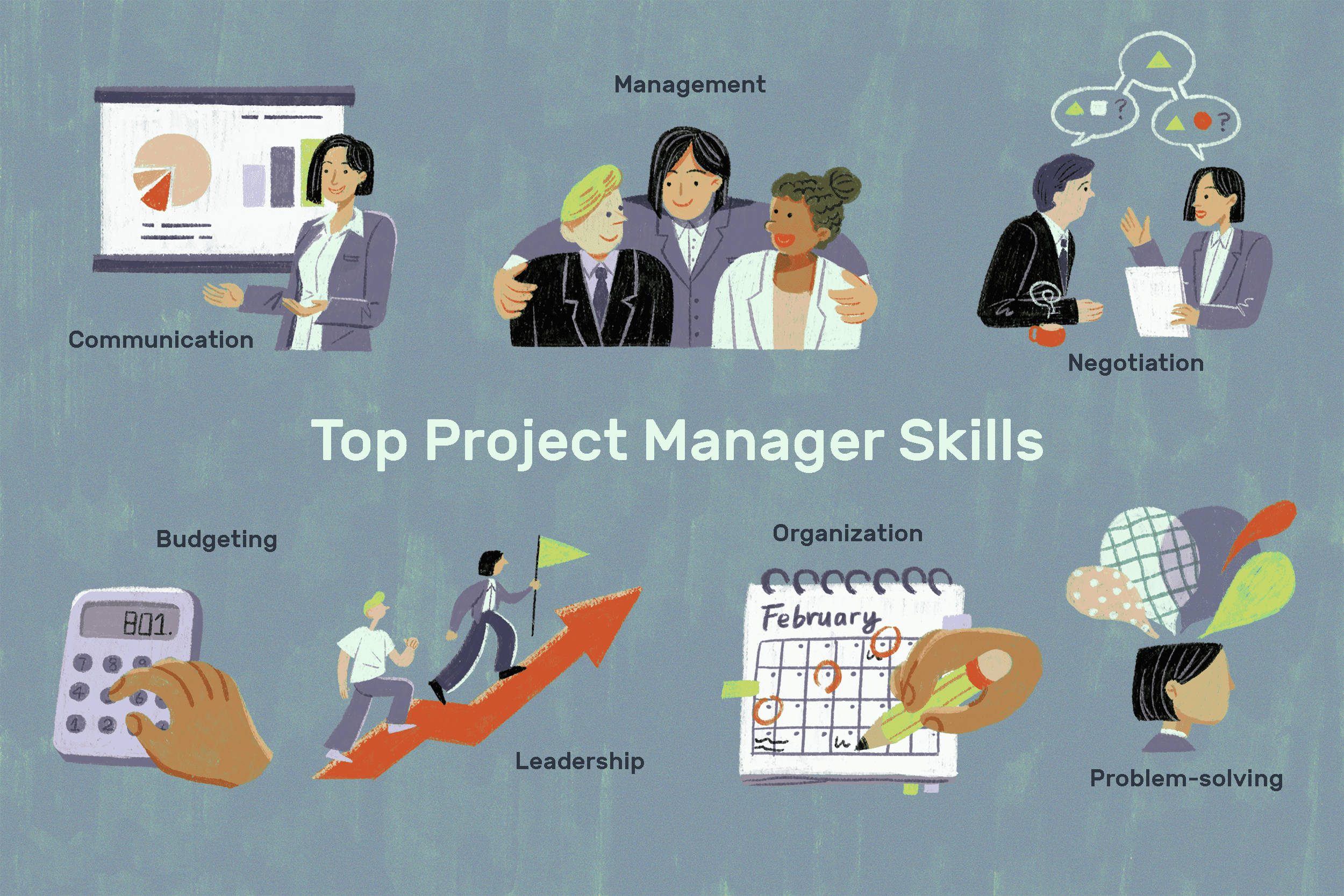
PITFALLS
Budget related
The budget is not in accordance with the scope, matters are not included in the budget but are part of the scope.
The budget contains set items, while a fixed price has been contractually agreed with the customer.
The budget is an amount that is not divided into items for different parts.
There is no agreement on the budget, even though the project has already been sold.
Scope related
The scope is not clearly defined. For example, because the supply contract mentions an applicable standard that nobody knows sufficiently or is written in a foreign language. Or a “set” of spare parts that are not clearly specified anywhere.
The customer has a different expectation of the product to be delivered. The scope changes on behalf of the customer during the execution of the project. The scope does not change in small steps (Scope creep) in the formal order of the customer, but for example due to informal requests from the customer or through standardization (we always do it this way). It is not possible to supply the contractual scope. (A flying carpet does not exist)
Timetable related
The contractual delivery time is not feasible within the scope and budget.
A changed scope (not on behalf of the customer) leads to an extension of the delivery time (eg an adapted method during the production of a part)
A changed scope (but on behalf of the customer) does not lead to a new contractual delivery time.
The contractual delivery time is not clearly defined, or depends on something outside the project’s sphere of influence (eg the delivery time is 10 months after drawings have been approved by the customer. When will the customer approve them, and which drawings must be approved)
Project team related
No formal project team has been appointed, employees do it a little bit.
The project team members have no time for the project.
The project team members are insufficiently qualified and / or motivated for the assigned work.
There are too few project team members to deliver the project within the three project boundaries.
The project team is not a team, but a collection of individuals.
The individual activities are not clearly defined with regard to scope and time schedule.
There is no adequate communication within or outside the project team.
This list is only a brief summary of what can go wrong, however many derailed projects are often caused by several of these pitfalls.
It is up to the PM to direct the project in such a way that the pitfalls are avoided.
The PM has a range of tools for this, mainly based on experience and training.
There is of course also a list of PM specific problems in a project:
PM related
- The PM is insufficiently qualified and or motivated for the assigned work.
- The PM is not or insufficiently aware of the scope and budget.
- The PM does not communicate adequately with the right stakeholders outside the project.
- The PM is not sensitive to signs of impending problems both inside and outside the project.
- The PM is unable to manage stakeholder expectations.
- The PM has insufficient time for the project.
A certified PM (PMP, Prince2, IPMA or otherwise) does not guarantee a successful project.
The desired certificate indicates that a certain basic knowledge may be assumed to be known, but how this knowledge should be applied is a different story.
Each project is different and requires its own approach and Project Management method.
There is no clear way to manage a project in the most ideal way
In essence, it will always come down to managing the balance between Budget, Scope and Time Planning.
The start of a project must always contain an accepted balance between Budget, Scope and Time Planning.
The PM must have clear at the start of a project what the scope is, what the budget is for this (money, hours, materials) and what the time schedule is.